A Historical Perspective on Multiple Sclerosis
“Disease is very old, and nothing about it has changed. It is we who change as we learn to recognize what was formerly imperceptible.” - Jean-Martin Charcot.
In 1868, a mysterious neurological condition finally received a name. The French neurologist Jean-Martin Charcot described and classified a disease he called la sclérose en plaques. Often regarded as the “Father of Neurology”, Charcot was the first to recognize this disorder as a distinct medical entity. The condition would later become known in English medical literature as Multiple Sclerosis (MS) [1].
Yet the story of MS did not begin with Charcot. Descriptions resembling the disease appear in medical writings dating as far back as the Middle Ages. What had been missing, however, was the scientific framework needed to connect symptoms observed in living patients with structural changes in the nervous system. The nineteenth century brought exactly that shift: physicians began pairing clinical observation with pathological anatomy. This methodological breakthrough allowed Charcot to link patients’ neurological symptoms with distinctive lesions - scattered sclerotic plaques - found in the brain and spinal cord during post-mortem examination [2][3].
From these observations emerged what is now known as Charcot’s triad, a set of hallmark symptoms that helped physicians recognize the disease. These include nystagmus, involuntary rhythmic eye movements; intention tremor, which appears during voluntary motion; and scanning speech, a distinctive form of dysarthria in which words are pronounced slowly and broken into syllables.
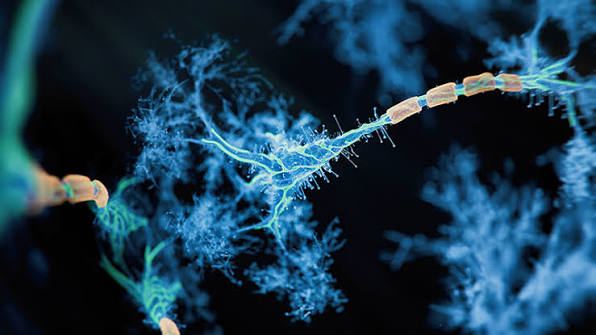
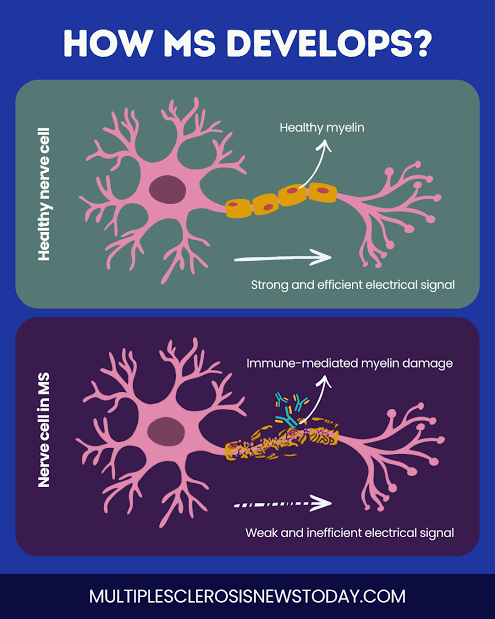
Modern neuroscience has greatly expanded upon Charcot’s early insights. Today, multiple sclerosis is understood as a chronic autoimmune, neuroinflammatory, and neurodegenerative disorder affecting the central nervous system (CNS) [4]. Although decades of research have significantly advanced our knowledge, the precise causes of MS remain complex and not fully understood. What is clear, however, is the central role of demyelination - the destruction of the myelin sheath, the insulating layer that surrounds nerve fibers in the white matter of the brain and spinal cord [5]. Because myelin enables rapid and efficient electrical signaling between neurons [6], its degradation disrupts communication within the nervous system and can lead to a wide range of neurological symptoms, including impaired motor control.
Historically, identifying MS was far from straightforward. The disease’s polymorphic presentation often led physicians to confuse it with other neurological conditions, particularly Parkinson’s disease, which had been described decades earlier under the name paralysis agitans. Both disorders could involve tremors and motor disturbances, making differentiation difficult. One of Charcot’s earliest and most influential cases involved his female servant, Luc, who had initially been diagnosed with shaking palsy. Through careful observation, Charcot noticed something unusual about her symptoms. Unlike Parkinsonian tremors, which occur continuously, Luc’s tremors appeared primarily during intentional movements. This subtle difference raised an important question: was this truly the same disease? The answer emerged after Luc’s death. During the post-mortem examination of her brain and spinal cord, Charcot identified distinctive sclerotic plaques distributed throughout the central nervous system. These lesions confirmed that the disorder he was observing was not Parkinson’s disease, but a separate and previously unrecognized neurological pathology [3].
Much of this pioneering work took place at the Hôpital de la Salpêtrière in Paris, where Charcot worked alongside his colleague Alfred Vulpian. Together, they helped define multiple sclerosis as a distinct clinical entity. Their early observations highlighted the severe prognosis associated with the disease and the widespread lesions found throughout the nervous system - features that remain central to MS diagnosis today. They also recognized something that continues to challenge neurologists even now: MS rarely presents the same way twice. Because lesions can appear in different regions of the central nervous system - spinal, cerebral, or both - the symptoms can vary widely between patients. This variability is one of the defining characteristics of multiple sclerosis and remains a key challenge in both diagnosis and treatment.
These early discoveries laid the foundation for more than a century of neurological research. From Charcot’s first observations of mysterious plaques in the nervous system to today’s advanced imaging techniques and molecular studies, our understanding of multiple sclerosis has evolved tremendously. Yet many questions remain unanswered. Despite significant therapeutic progress, MS continues to be an incurable and highly complex disease. Understanding its mechanisms - from immune dysregulation to demyelination and neurodegeneration - remains one of the central challenges of modern neuroscience, and a crucial step toward developing treatments that can not only slow the disease but ultimately repair the damage it causes.
Bibliography:
1. B. Zalc. One hundred and fifty years ago Charcot reported multiple sclerosis as a new neurological disease. Brain. Vol. 141, Issue 12, pg. 3482-3488, 2018, https://pmc.ncbi.nlm.nih.gov/articles/PMC6262215/.
2. Harvard Medical School Library - Countway Library of Medicine. Medical treatment in the nineteenth-century. Apothecary Jars Exhibit, https://collections.countway.harvard.edu/onview/exhibits/show/apothecary-jars/nineteenth-century-treatment.
3. Z. G. Reyes. Sclérose en Plaques: A Tribute to the History of Multiple Sclerosis and Charcot’s Role in Precision Medicine Today. American Academy of Neurology Medical Student Essay Award. 2023, https://www.aan.com/siteassets/home-page/education-and-research/research/award-winners/scientific-award-winners/2023-winners/reyes_zabrina_medical_student_essay.pdf.
4. A. H. Maghzi, A. Borazanci, J. McGee, J. S. Alexander, E. Gonzalez-Toledo, A. Minagar. 1 - Multiple Sclerosis: Pathophysiology, Clinical Features, Diagnosis, and Management. Neuroinflammation. pg. 1-23, 2011, https://www.sciencedirect.com/science/chapter/edited-volume/abs/pii/B9780123849137000010?via%3Dihub.
5. J. M. Greer, P. A. McCombe. Role of gender in multiple sclerosis: Clinical effects and potential molecular mechanisms. Journal of Neuroimmunology, vol. 234, issues 1-2, pg. 7-18, 2011, https://www.sciencedirect.com/science/article/abs/pii/S0165572811000658.
6. P. Morell, W. T. Norton. Myelin. Scientific American, vol. 242, no.5 (May 1980), pg. 88-119, https://www.jstor.org/stable/24966326.
Stay Informed
Join our community of medical professionals and researchers. Get the latest insights delivered to your inbox.