Everything You Need To Know About Alzheimer's Disease
Alzheimer’s Disease – Everything You Need to Know
Disclaimer:
As a student passionate about biomedicine, this article is a compilation of information from reputable sources. It is intended for educational purposes only.
What is Alzheimer’s Disease?
Alzheimer’s disease is one of the most serious and widespread neurological disorders in the world. It is a progressive brain disease that affects memory, thinking, and behavior, eventually interfering with a person’s ability to carry out daily activities. It is also the most common cause of dementia, accounting for the majority of cases globally.
Alzheimer’s disease is a degenerative brain disorder that gradually destroys brain cells (neurons) and the connections between them. Over time, this leads to a significant loss of brain function and brain mass. The disease usually develops in older adults and progresses slowly over several years. It was first described in 1906 by neurologist Alois Alzheimer.
Causes and Brain Changes
The exact cause of Alzheimer’s disease is not fully understood, but it is believed to result from a combination of genetic, environmental, and lifestyle factors.
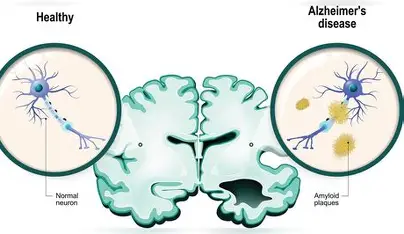
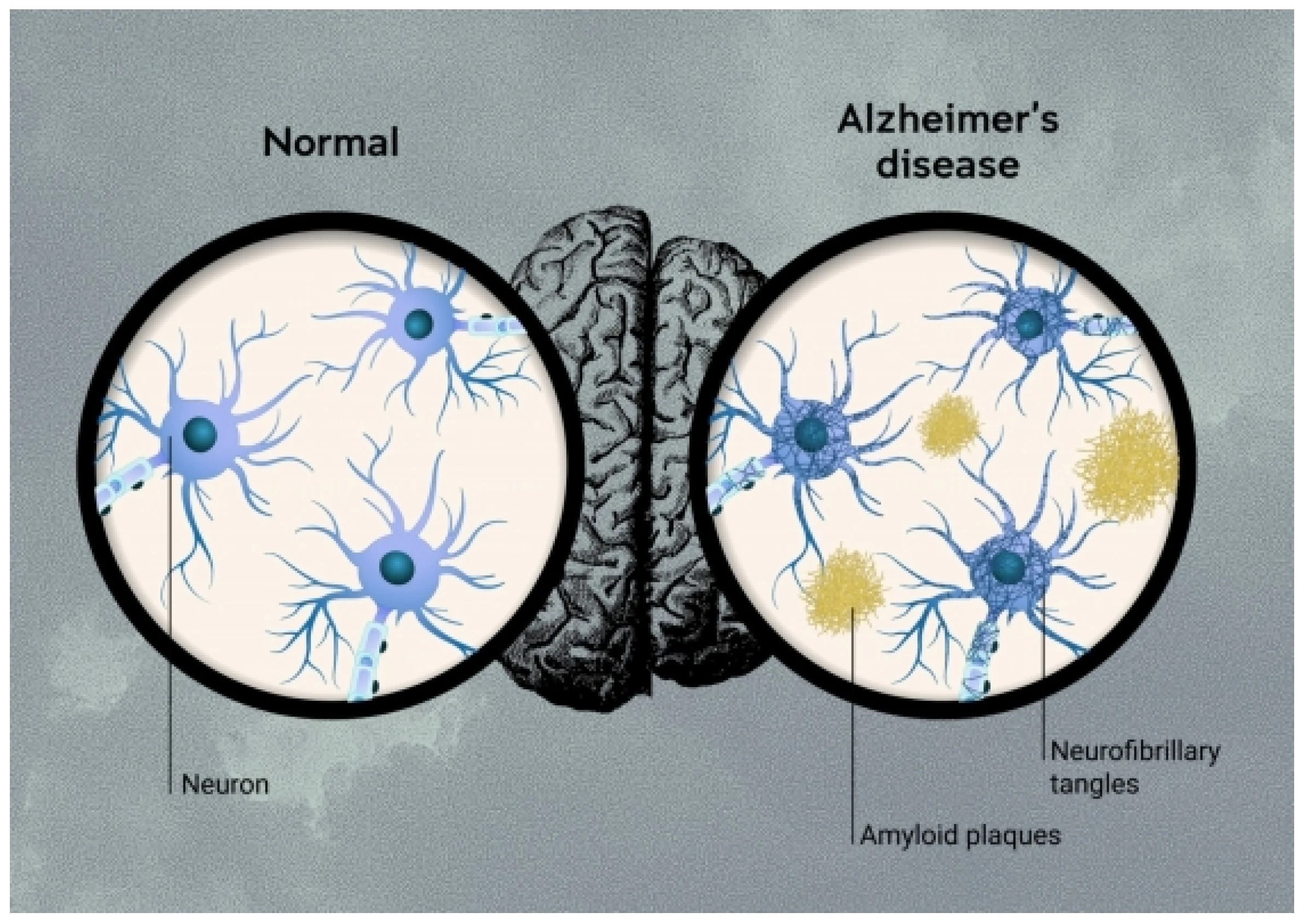
At a biological level, Alzheimer’s is characterized by two abnormal structures in the brain:
->Amyloid plaques – clumps of beta-amyloid protein that disrupt communication between brain cells
->Neurofibrillary tangles – twisted fibers of tau protein that damage the internal structure of neurons
These changes cause neurons to lose function, die, and eventually lead to brain shrinkage.
Symptoms
The most common early symptom is memory loss, especially forgetting recent conversations or events.
As the disease progresses, symptoms become more severe and include:
Cognitive symptoms
->Difficulty thinking, concentrating, and making decisions
->Problems with language and finding the right words
->Confusion about time and place
Behavioral and emotional symptoms
->Mood swings and depression
->Social withdrawal
->Personality changes (anger, distrust, aggression)
Functional difficulties
->Trouble performing everyday tasks (cooking, dressing, managing money)
->Getting lost in familiar places
In advanced stages, patients may lose the ability to communicate, move, or care for themselves.
Stages of Alzheimer’s Disease
Alzheimer’s disease develops gradually in three main stages:
1. Preclinical stage – brain changes begin before symptoms appear
2. Mild cognitive impairment (MCI) – noticeable memory problems, but daily functioning is still possible
3. Dementia stage – severe cognitive decline affecting daily life
The disease can last anywhere from 2 to 20 years, depending on the individual.
Risk Factors
Several factors increase the likelihood of developing Alzheimer’s disease:
->Age – the most important risk factor
->Genetics and family history
->Head injuries
->Cardiovascular problems (high blood pressure, cholesterol, diabetes)
->Poor lifestyle habits (lack of exercise, smoking, alcohol abuse)
->Sleep disorders and social isolation
Although age is the strongest risk factor, Alzheimer’s is not a normal part of aging.
Diagnosis
Diagnosing Alzheimer’s disease involves multiple steps:
->Medical history and symptom evaluation
->Memory and cognitive tests
->Brain imaging (such as MRI or PET scans)
->Biomarker tests (detecting amyloid and tau proteins)
Modern diagnostic techniques allow doctors to detect the disease earlier than in the past.
Treatment
There is currently no cure for Alzheimer’s disease, but treatments can help manage symptoms and slow progression.
Medications
->Cholinesterase inhibitors (donepezil, rivastigmine, galantamine) – improve communication between brain cells
->Memantine – regulates brain activity and may improve cognition
Supportive care
->Managing depression, anxiety, and sleep problems
->Providing structured routines and caregiver support
->Prevention and Lifestyle
Although Alzheimer’s cannot be completely prevented, certain lifestyle changes may reduce the risk:
->Regular physical exercise
->Healthy diet (especially Mediterranean diet)
->Mental stimulation and lifelong learning
->Social engagement
->Controlling cardiovascular risk factors (blood pressure, cholesterol, diabetes)
Complications
In advanced stages, Alzheimer’s can lead to serious health problems such as:
->Infections (e.g., pneumonia)
->Malnutrition and dehydration
->Loss of mobility
->Difficulty swallowing
These complications are often the cause of death in patients with Alzheimer’s disease.
Conclusion
Alzheimer’s disease is a complex and devastating condition that affects millions of people worldwide. It progressively damages memory, thinking, and independence, deeply impacting both patients and their families. While there is no cure yet, early diagnosis, proper treatment, and a healthy lifestyle can help slow its progression and improve quality of life.
Understanding this disease is essential not only for those affected but also for society as a whole, as the number of cases continues to grow with the aging population.
Sources
Mayo Clinic. “Alzheimer’s Disease.” Mayo Clinic, 2025.
https://www.mayoclinic.org/diseases-conditions/alzheimers-disease/symptoms-causes/syc-20350447
Encyclopaedia Britannica. “Alzheimer Disease.” Britannica, 2025.
https://www.britannica.com/science/Alzheimer-disease
Institutul Brain Map. “Boala Alzheimer – simptome, cauze și tratament.” Institutul Brain Map, 2025.
https://institutulbrainmap.ro/boala-alzheimer-simptome-cauze-si-tratament/
MedLife. “Alzheimer: cauze, simptome și tratament.” MedLife, 2025.
https://www.medlife.ro/glosar-medical/afectiuni-medicale/alzheimer-cauze-simptome-tratament
Stay Informed
Join our community of medical professionals and researchers. Get the latest insights delivered to your inbox.