I saw a LinkedIn post about lab grown brains.....Then I researched it.
A few days ago I came across a post from Linkedln from Tuqa Mahdi taking about scientists growing "tiny brains in laboratories". At first it sounded like something pulled straight out of a sci-fi movie, but the more I looked in to it the more I realized its not really science fiction, at least not anymore.
SO WHAT EXACTLY DID SCIENTISTS GROW?
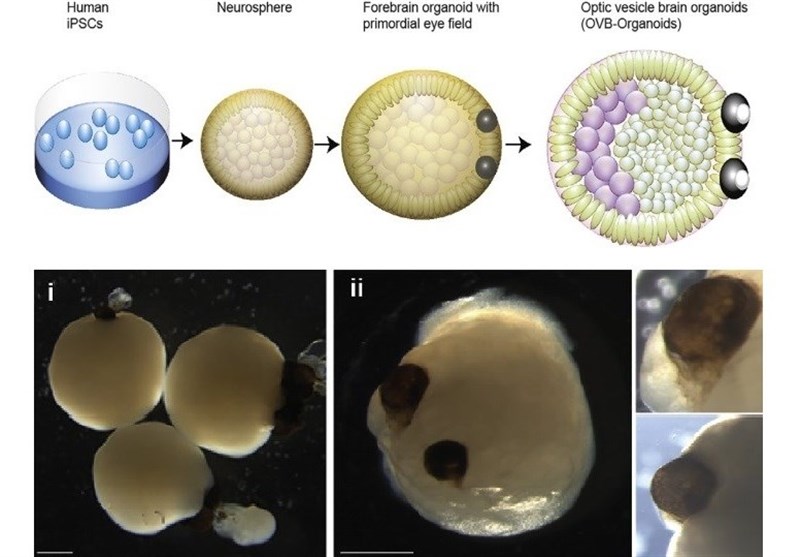
When people hear the phrase "scientists grew a brain" they often imagine a full and functioning brain floating into a glass container but that's not quite what exits today. Researchers instead grow something called a brain organoid
This brain organs is a tiny simplified model of brain tissue created from human stem cells. Stem cells are special because they can transform into many different type of cells inside the body. Scientists can guide these stem cells into becoming neurons and other brain related cells. Over time these cells begin organizing themselves into three-dimensional structures that resemble parts of a developing human brain. Most of the organoids are extremely small-often only a few centimeters wide many of these resemble a brain of a really stage fetal brain development rather than one of an adult. Even if they are tiny they can still do quite remarkable things: Mimic certain aspects of learning and memory, Form neuron activities, React to simulation.
SO WHY EXACTLY ARE SCIENTISTS GROWING THESE BRAIN ORGANOIDS?
The human brain is one of the most complex structures in existence. For decades neuroscientists struggled with a problem that it is extremely difficult to study living human brain tissue directly. Animal testing can only reveal part of the picture because human brains work differently from mouse or rat brains in many important ways.
Brain organoids give researchers a new tool.
Instead of experimenting on living people, scientists can observe miniature brain-like systems in controlled laboratory conditions. This can open the door to studying a lot of things such as: Alzheimer's disease, Parkinson's disease, Autism spectrum disorders, Epilepsy, Schizophrenia, Drug responses.
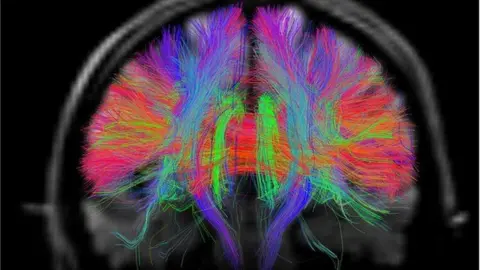
Researchers can even grow organoids using cells from individual patients. That means future treatments could potentially become highly personalized.
Imagine testing medication on a miniature version of a patient’s own neural tissue before prescribing it.
THE BREAKTHROUGH THAT STARTED GETTING ATTENTION ONLINE
In recent years, several experiments pushed brain organoids into mainstream conversations.
One of the biggest reasons people started posting about this topic online was because researchers discovered that some organoids were displaying surprisingly advanced neural behaviors. Scientist discovers thing such as: Rhythmic electrical signals similar to early human brain development, Early signs of adaptive learning, Basic memory related process. Researchers at Johns Hopkins recently reported evidence suggesting that certain organoids demonstrated the “building blocks” required for learning and memory. Another major development came from experiments where scientists connected organoids to computer systems through electrodes.These systems allowed the organoids to receive information and respond to stimuli. Some experiments even trained organoid systems to perform very basic computational tasks.That is where the phrase “organoid intelligence” started appearing.
And yes — that phrase sounds like it belongs in a cyberpunk novel.
ORGANOID INTELLIGENCE: BIOLOGY MEATS COMPUTING
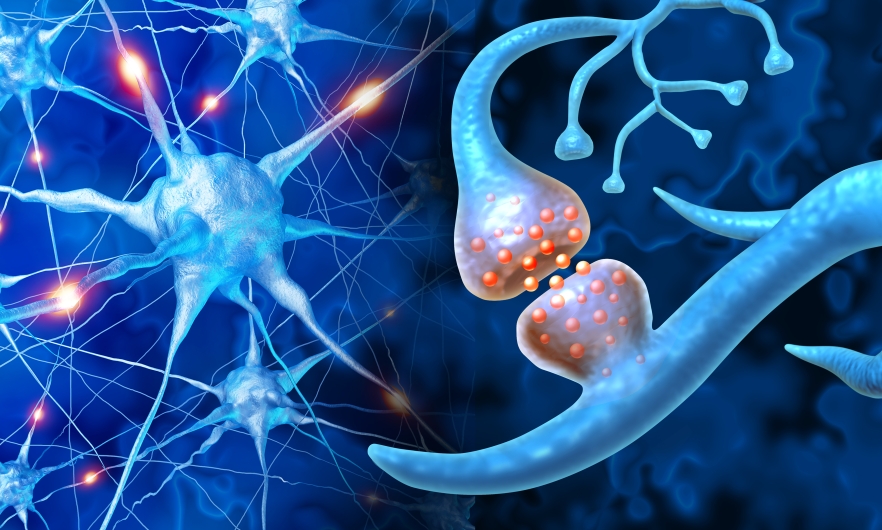
One of the most futuristic aspect in this field is the idea that biological neurons could eventually complement traditional computer chips. Today’s artificial intelligence systems run on silicon hardware. But biological brains are incredibly energy-efficient compared to modern computers. The human brain consumes roughly as much energy as a light bulb while outperforming even the most advanced AI systems in areas like adaptability, pattern recognition, and general learning. So we raise the question: What if scientists could harness living neural tissue for computing? Some companies and research labs are already exploring this possibility. Researchers have connected brain organoids to electrodes and digital systems to study how they process information.In some experiments, organoids learned to respond more effectively to repeated stimulation over time. One study even involved organoid systems improving performance on a simplified engineering task after receiving feedback.
This does not mean scientists created conscious AI. However, it does suggest that living neural tissue may possess useful adaptive properties for future computing systems.
NOW COULD SCIENTISTS EVER GROW A FULL HUMAN BRAIN?
This is probably the question most people immediately ask. Technically speaking, modern science is nowhere near creating a complete conscious human brain in a lab.There are enormous limitations such as the fact that a living brain depends on: blood vessels, hormonal system, sensory imput, body interactions, immune system. Current organoids remain highly simplified. One major issue is that organoids often struggle to survive long-term because they lack full vascular systems capable of delivering oxygen and nutrients efficiently. Researchers are actively working on solving these problems. Some recent studies experimented with creating blood vessel-like structures inside organoids. Even so, scientists remain extremely far from building a complete human brain.
AND SOME OF MY FINAL THOUGHTS
That LinkedIn post I saw initially sounded like clickbait. But after researching the topic more deeply, I realized the reality is actually more interesting than the headlines. Scientists are not secretly building fully conscious brains in underground laboratories. What they are doing is creating tiny brain-like systems that could revolutionize medicine, neuroscience, and computing. At the same time, these breakthroughs force humanity to confront questions we have never truly faced before.
If biology can eventually merge with computation…
If living neural systems can process information…
If miniature brain tissue can learn and adapt…
Then the boundaries between technology and life may become increasingly difficult to define. Whether this field ultimately becomes one of humanity’s greatest medical achievements or one of its most controversial scientific frontiers will depend not only on the technology itself, but on the ethical decisions society makes along the way.
And honestly, that may be the most important part of the entire conversation.
Stay Informed
Join our community of medical professionals and researchers. Get the latest insights delivered to your inbox.