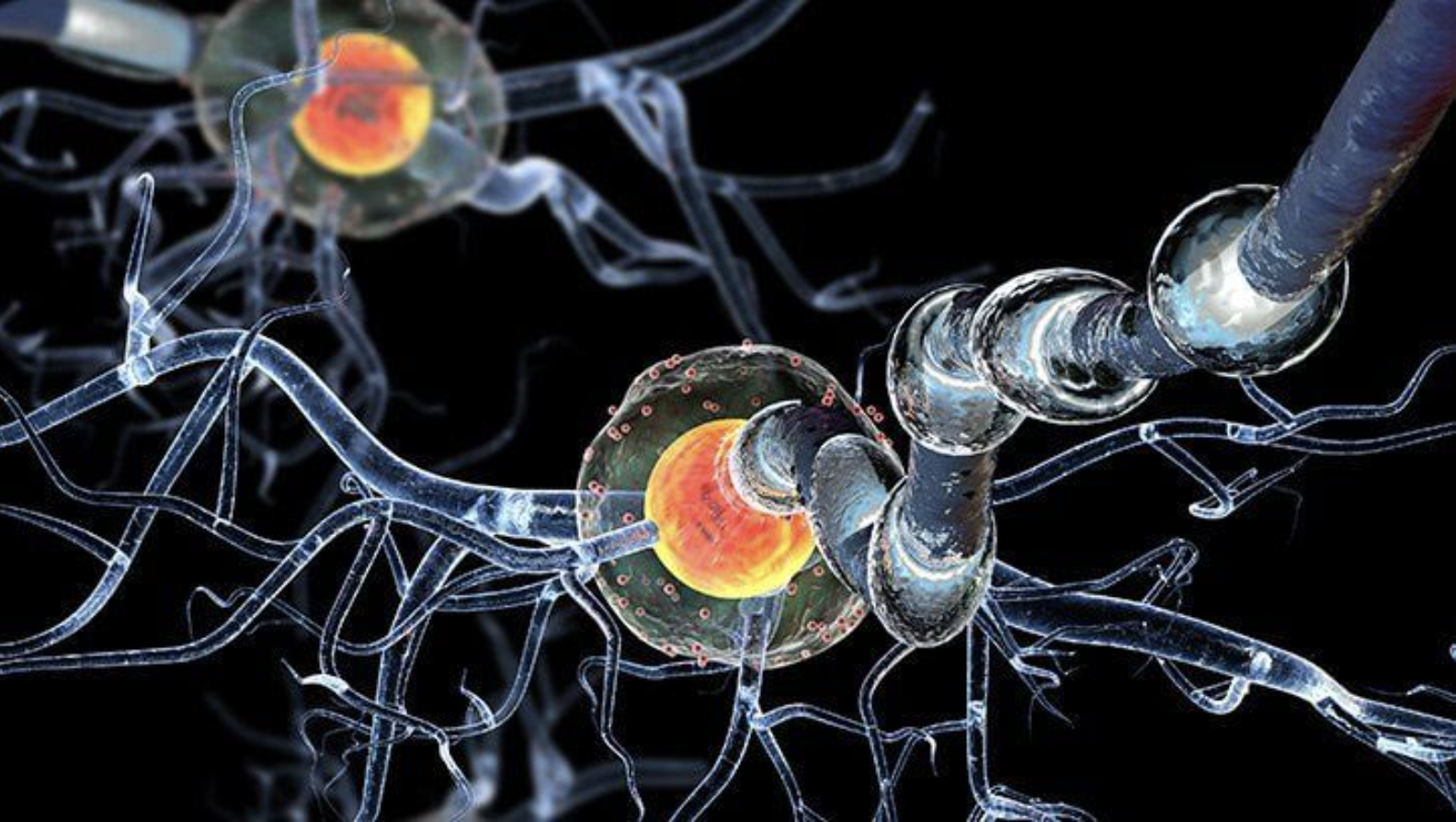
When the Body Forgets Itself; the Mystery of Autoimmune Diseases
Your immune system spends its entire life making one incredibly important distinction: what belongs to me and what doesn’t?
Every second, immune cells encounter proteins, cells, bacteria, viruses, and fragments of damaged tissue. Most of the time, the system makes the correct decision almost effortlessly.
This is called immune tolerance: the ability to recognise the body’s own components as “self” and avoid attacking it. But the autoimmune disease begins when this system breaks down.
The immune system doesn’t suddenly become evil. It doesn’t consciously decide to attack its host. Instead, something goes wrong in the biological mechanisms that normally prevent self-reactive immune cells from causing damage. The result can be devastating: the body’s defence system becomes a source of disease.
Teaching immune cells what “self” means
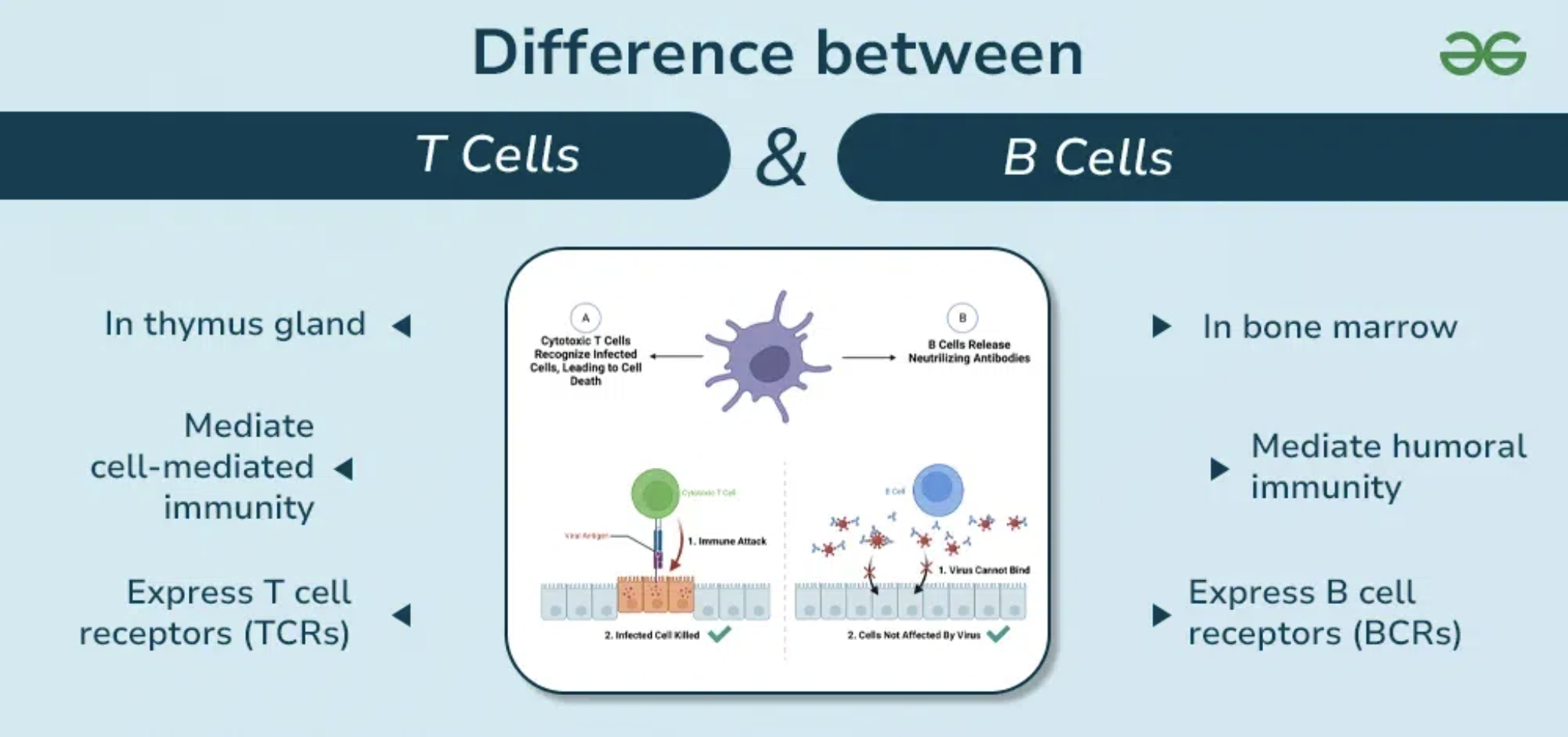
Before the T-cells become fully functional, they undergo an “educational” process inside the thymus. How it works is that immature T-cells are exposed to thousands of self-antigens. If a T-cell reacts too strongly to one of them, it can be eliminated through negative selection. One of the molecules making this possible is the transcription factor AIRE (autoimmune regulator). This allows specialised thymus cells to express proteins that normally belong to other organs.
Think of it like training.
A developing T-cell might never physically encounter a pancreatic protein while inside the thymus. AIRE helps bring that information into the training environment. B cells undergo their own tolerance mechanisms in the bone marrow. But this process is not perfect. Some self-reactive lymphocytes escape. And that is where the immune system’s second line of defence begins.
2. Peripheral Tolerance — The Immune System’s Brakes
Not every autoreactive lymphocyte can be eliminated during development. So the body has several mechanisms for controlling them after they enter the circulation. These include:
-Anergy: the lymphocyte becomes functionally inactive.
- Deletion: potentially dangerous cells are eliminated.
- Regulatory T cells (Tregs): specialised CD4⁺ T cells suppress excessive or autoreactive immune responses.
- Inhibitory receptors: molecules such as CTLA-4 and PD-1 act as molecular brakes on T-cell activation.
Together, these mechanisms create a remarkably sophisticated safety system.
The immune system therefore isn’t simply an army. It is an army with rules of engagement. Autoimmune disease can develop when those rules fail.
3. The Tolerance Breaks.
Unfortunately, there is rarely one single cause. Autoimmune diseases usually arise from interactions among genetics, environment, and immune regulation.
→ Certain genetic variants increase susceptibility to autoimmune diseases.
The HLA system is particularly important because HLA (Human Leukocyte Antigen) molecules present peptide fragments to T cells and therefore influence which antigens the immune system “sees.”
Different HLA variants are associated with different autoimmune diseases.
For example:
→ Type 1 diabetes is caused by HLA-DQ and HLA-DR variants
→ Rheumatoid arthritis is effected by HLA-DRB1 variants
→ Celiac disease is caused due to HLA-DQ2 / HLA-DQ8
→ Multiple sclerosis is triggered by HLA-DRB1*15:01
But genetics is not everything, because if it were, identical twins would always develop the same autoimmune diseases. They don’t; something else has to influence the immune system.
→ The environment also plays a very present role.
Potential environmental influences include:
- infections
- smoking
- ultraviolet radiation
- certain medications
- hormonal factors
- tissue injury
- changes in the gut microbiome
One particularly interesting mechanism is molecular mimicry. Imagine that a viral protein happens to resemble one of your own proteins. The immune system develops T-cells and antibodies against the virus. The infection disappears. But some of those immune responses may cross-react with the similar-looking human protein. The immune system has identified the correct enemy, but the wrong target.
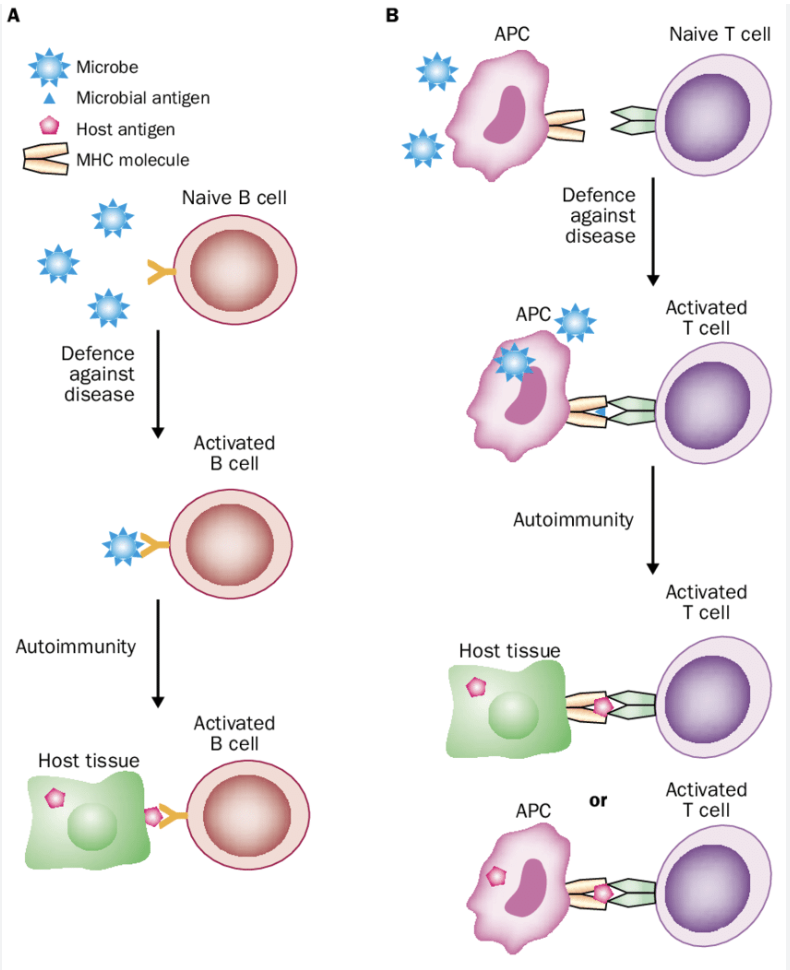
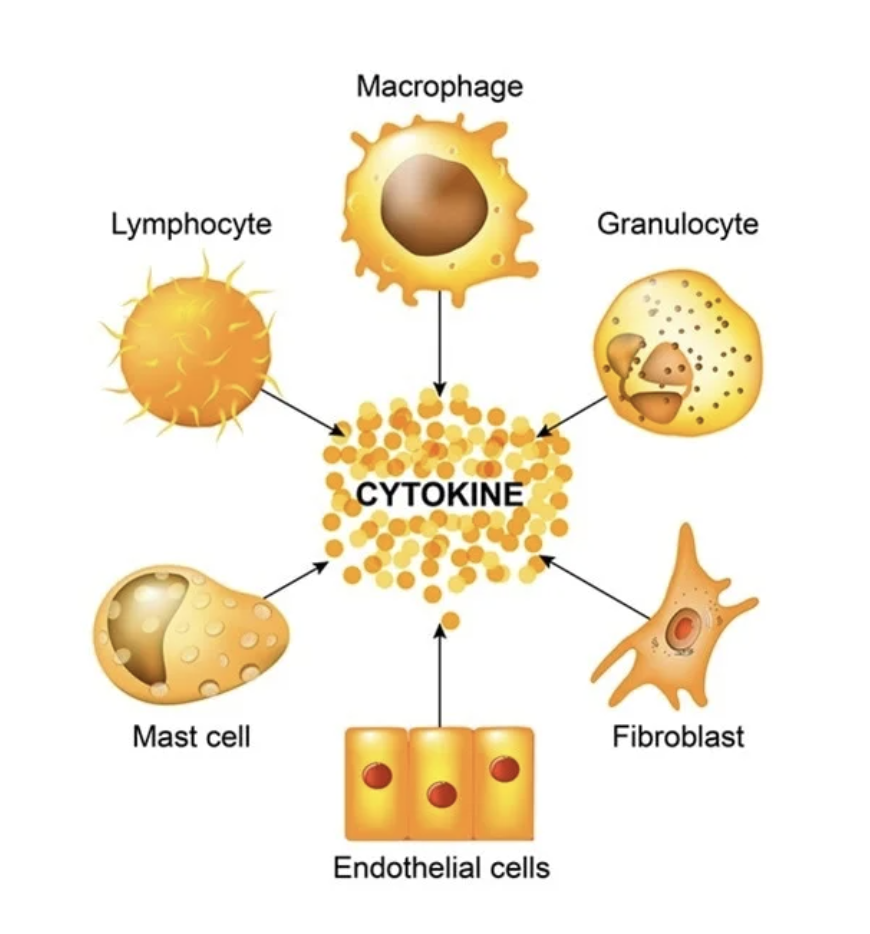
Another mechanism is bystander activation. During a strong infection, inflammatory cytokines activate many immune pathways simultaneously. Autoreactive lymphocytes that were previously kept under control may become activated in this inflammatory environment. Tissue damage can add another layer. When cells are damaged, intracellular molecules that are normally hidden from the immune system can become exposed.
The result can be a chain reaction: infection or injury → inflammation → immune activation → tissue damage → more immune activation.
4. The immune system doesn’t cause just one disease.
Autoimmunity is not a single condition; It is an entire family of diseases.
In type 1 diabetes, immune-mediated destruction of pancreatic β-cells reduces insulin production.
In multiple sclerosis, immune-mediated inflammation contributes to damage within the central nervous system, including myelin and axons.
In rheumatoid arthritis, chronic inflammation attacks the synovium surrounding joints.
In systemic lupus erythematosus (SLE), abnormal immune responses can affect multiple organs, including the skin, kidneys, joints and nervous system.
The clinical manifestations may be completely different. But underneath them is a shared concept: a failure of immune tolerance.
The B Cell Problem: When Antibodies Turn Against You
B cells are famous for producing antibodies. Normally, antibodies are incredibly useful. They recognize pathogens and help the immune system eliminate them, but in autoimmune disease, B cells can produce autoantibodies; antibodies directed against the body’s own molecules. In SLE, for example, antibodies can recognize nuclear components. These autoantibodies can form immune complexes. When immune complexes deposit in tissues, they can activate complement and recruit inflammatory cells, contributing to tissue injury.
But B cells do more than produce antibodies.
They can also:
- present antigens to T cells,
- produce cytokines,
- organise immune responses,
- and help maintain populations of autoreactive immune cells.
This explains why targeting B cells has become such an important strategy in autoimmune medicine.
Modern medicine learns to target the immune system.
For decades, treatment often meant suppressing the immune system broadly. Corticosteroids reduce inflammation. Methotrexate, azathioprine, mycophenolate and other immunosuppressive drugs can reduce immune activity. These treatments can be lifesaving. But there is an obvious problem:
We need our immune system. If you suppress it too much, the same system that causes autoimmune disease becomes less capable of defending against infections and malignancy. So medicine started asking a better question:
What if we could block only the parts of the immune system causing the disease?
This led to biologic therapies.
Cytokines and Immune Pathways
The immune system communicates using thousands of molecular signals.
Some of the most important are cytokines. Instead of suppressing every immune cell, modern therapies can block specific cytokines or their receptors.
Examples include:
- TNF inhibitors → used in rheumatoid arthritis, inflammatory bowel disease and other inflammatory disorders.
- Tocilizumab → blocks the IL-6 receptor.
- IL-17 inhibitors → important in psoriasis and psoriatic arthritis.
- Belimumab → inhibits BLyS/BAFF, a survival factor for B cells, in SLE.
- Anifrolumab → blocks the type I interferon receptor in SLE.
- Rituximab → depletes CD20-positive B cells.
- Ocrelizumab → targets CD20-positive B cells and is an important therapy for multiple sclerosis.
The philosophy has changed.
Instead of: “Suppress the immune system.”
Medicine increasingly aims for:
“Find the pathway driving the disease and interrupt it.”
But there is a problem. Even the best targeted drugs generally control autoimmune disease rather than permanently correcting the underlying immune dysfunction. Many patients need treatment for years. Stop the therapy, and the disease may return. This creates an intriguing question:
What if we could reset the immune system instead?
Not suppress it. Not continuously block it. But actually change the immune repertoire responsible for the disease. This idea is called an immune reset. And one of the most unexpected technologies being explored for this purpose originally came from cancer treatment.
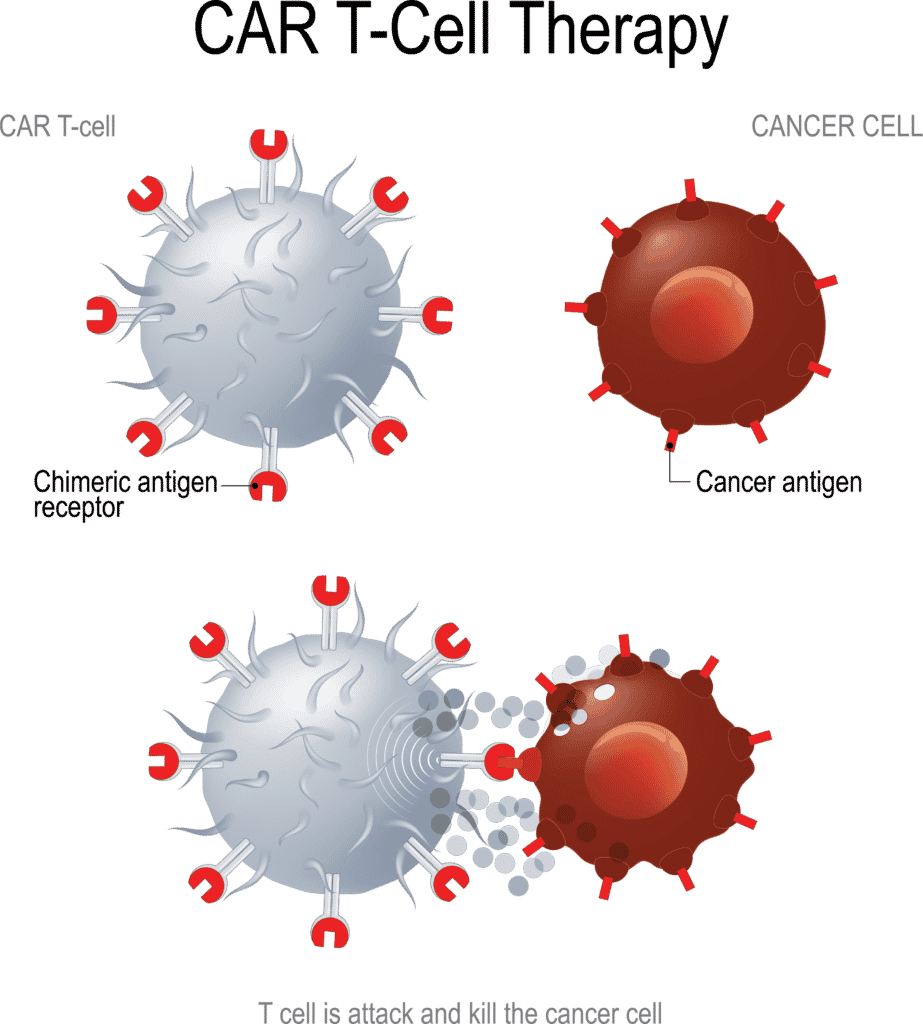
CAR-T and Autoimmune Disease
Early studies in severe, treatment-refractory autoimmune disease showed something remarkable. Patients receiving CD19-directed CAR-T therapy experienced profound B-cell depletion. In some patients with severe SLE, systemic sclerosis and inflammatory myopathies, disease activity fell dramatically and patients were able to remain off conventional immunosuppressive therapy during follow-up. The concept is different from ordinary immunosuppression. Instead of continuously blocking an immune pathway, CAR-T can potentially remove a large portion of the pathological B-cell compartment and allow the immune system to rebuild.
This is why researchers use the term: immune reset.
A 2025 perspective in Nature Reviews Immunology described personalized cellular therapies such as CAR-T and hematopoietic stem-cell transplantation as potential ways to achieve sustained remission in selected autoimmune diseases. And the field has moved rapidly.
Going After More Than B Cells
Here is where the biology becomes particularly interesting. If B cells produce autoantibodies, eliminating B cells sounds logical.
But there is a complication: some plasma cells can survive B-cell exhaustion. Long-lived plasma cells can continue producing antibodies even when conventional B cells have disappeared. This is why researchers are exploring BCMA, a marker associated with plasma cells, alongside CD19.
In a 2025 phase 1 study of treatment-refractory SLE, researchers co-infused CD19- and BCMA-targeting CAR-T cells.
The reasoning was simple:
CD19 → target B cells
BCMA → target plasma cells
In the 15-patient cohort, 12 patients met both low-disease-activity and remission criteria by week 12. The study also found evidence of elimination of autoreactive clones and subsequent reconstitution of more naive B-cell populations.
That is fascinating because it suggests that the goal may not simply be B-cell deletion. It may be rebuilding a healthier immune repertoire.
What is happening in 2026?
It would be easy to read about CAR-T and conclude that autoimmune disease has been cured. We haven’t. The evidence is exciting, but these therapies remain investigational for autoimmune diseases. The studies so far have generally involved relatively small numbers of patients and specialized centers.
The risks are also real.
CAR-T therapy can cause complications such as:
- cytokine release syndrome (CRS)
- immune effector cell-associated neurotoxicity syndrome (ICANS)
- prolonged B-cell depletion
- hypogammaglobulinemia
- infections
- cytopenias associated with lymphodepleting chemotherapy
The good news is that the safety profile in early autoimmune studies has often been manageable. For example, the 2026 CASTLE phase 1/2a basket trial enrolled 24 patients with treatment-resistant SLE, systemic sclerosis and idiopathic inflammatory myopathies. No CRS above grade 2 and no ICANS were reported; 22 of 24 patients met their predefined efficacy endpoints at 24 weeks. But this is still early evidence. Large, controlled trials and longer follow-up are needed before we know whether these results will translate into routine clinical practice.
The Future May Begin Before Symptoms
One of the most exciting developments in autoimmune research is the realization that some diseases may have a preclinical phase.
The immune system can begin behaving abnormally before the patient feels sick. Autoantibodies may appear years before clinical symptoms.
That means the traditional model:
Symptoms → Diagnosis → Treatment
might eventually become:
Risk → Prediction → Prevention
Imagine identifying someone whose immune system is beginning to lose tolerance before significant tissue damage occurs.
Instead of treating established autoimmune disease, doctors could potentially intervene while the process is still reversible.
That is a completely different philosophy of medicine.
Conclusion
Autoimmune disease reveals one of the strangest contradictions in human biology. The immune system is designed to recognize danger. But its first responsibility is actually more subtle: it must know what not to attack.
When that tolerance fails, the consequences can range from relatively localized disease to life-threatening systemic inflammation.
For decades, medicine could mainly control the consequences.
Now, scientists are beginning to ask whether we can intervene deeper in the biology itself.
We can block cytokines.
We can deplete B cells.
We can engineer T cells.
We can potentially reset parts of the immune repertoire.
And researchers are beginning to explore something even more ambitious: teaching the immune system to tolerate specific self-antigens again.
We are not yet at the point where autoimmune diseases can simply be “reset” in every patient.
But the direction of research is changing.
The question used to be:
How can we suppress the immune system enough to stop it hurting the patient?
Now, increasingly, the question is:
How can we make the immune system remember who the patient is?
That may be the real future of autoimmune medicine.
Not a weaker immune system.
Not a permanently suppressed one.
But an immune system that has finally learned the difference between the enemy and itself.
⸻
Scientific References
Buckner, J. H. Antigen-specific immunotherapies for autoimmune disease. Nature Reviews Rheumatology, 2025. (Nature)
Junt, T. et al. Defining immune reset: achieving sustained remission in autoimmune diseases. Nature Reviews Immunology, 2025. (Nature)
Schett, G. et al. Advancements and challenges in CAR T cell therapy in autoimmune diseases. Nature Reviews Rheumatology, 2024. (PubMed)
Müller, F. et al. CD19 CAR-T cells for treatment-refractory autoimmune diseases: the phase 1/2 CASTLE basket trial. Nature Medicine, 2026. (Nature)
Feng, J. et al. Co-infusion of CD19-targeting and BCMA-targeting CAR-T cells for treatment-refractory systemic lupus erythematosus: a phase 1 trial. Nature Medicine, 2025. (Nature)
Wang, X. et al. Allogeneic CD19-targeting T cells for treatment-refractory systemic lupus erythematosus: a phase 1 trial. Nature Medicine, 2025. (Nature)
Becilli, M. et al. Anti-CD19 CAR T cells for pediatric patients with treatment-refractory autoimmune diseases. Nature Medicine, 2026. (Nature)
Stay Informed
Join our community of medical professionals and researchers. Get the latest insights delivered to your inbox.