World Patient Safety: Safe Care for Life
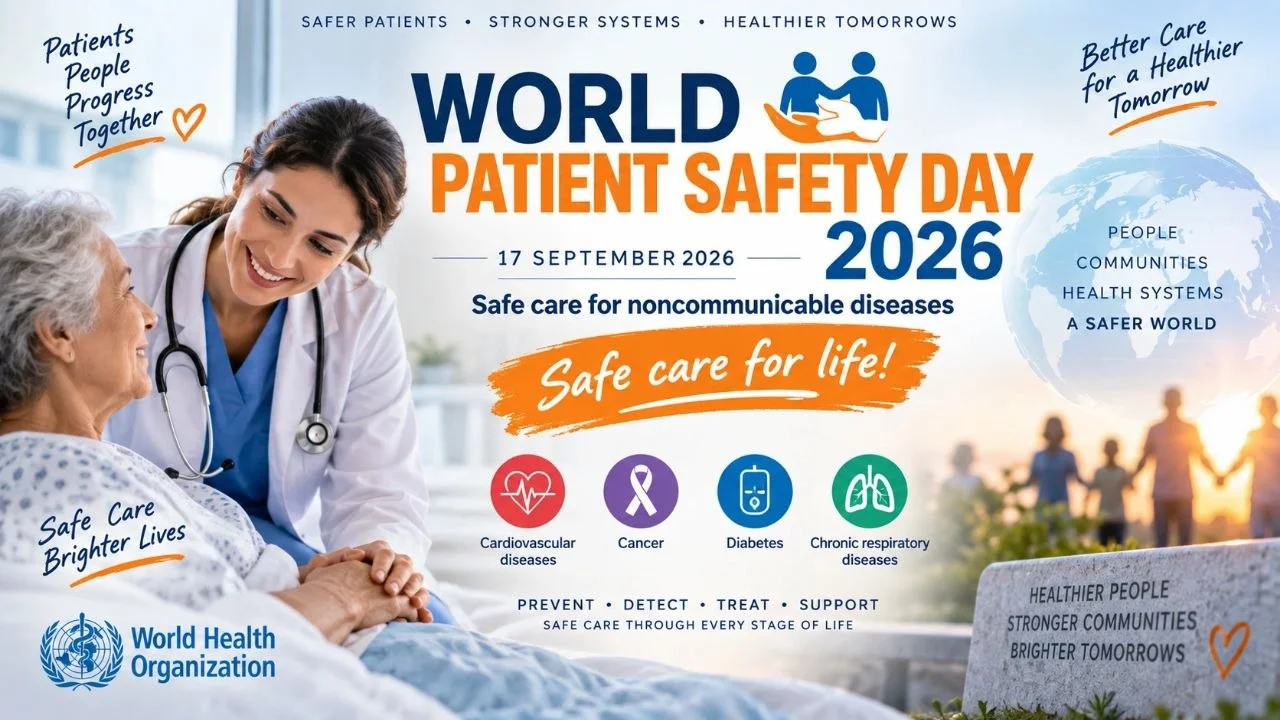
Every year, on 17 September, the world marks World Patient Safety Day — a day dedicated to raising awareness about one of the fundamental principles of healthcare: patients should receive care that is not only effective, but also safe.
Established by the World Health Organization (WHO) in 2019, World Patient Safety Day brings together patients, families, healthcare professionals, healthcare organizations and communities around a common goal: reducing avoidable harm in healthcare.
For 2026, the campaign focuses on a particularly important area of healthcare:
“Safe care for noncommunicable diseases”
with the slogan:
“Safe care for life!”
Why does patient safety matter?
Healthcare involves complex processes, multiple professionals and, often, many different stages of care. Every step — from diagnosis and medication to treatment and follow-up — needs to be as safe as possible.
According to WHO, approximately 1 in 10 patients experiences harm during healthcare, and around half of this harm is considered preventable.
Patient safety therefore goes beyond preventing mistakes. It involves creating healthcare systems in which risks can be identified, communicated and addressed before they result in harm.
It also means creating an environment where healthcare professionals can learn from incidents and near misses rather than simply assigning blame.
This year's focus: noncommunicable diseases
Noncommunicable diseases, or NCDs, include conditions such as cardiovascular diseases, cancer, diabetes and chronic respiratory diseases.
Unlike many acute illnesses, NCDs often require care over long periods of time. A patient may interact with healthcare professionals repeatedly — during screening, diagnosis, treatment, monitoring, rehabilitation and long-term management.
This continued interaction creates multiple opportunities for safety risks to appear.
For example, patients may receive care from different healthcare professionals or across different healthcare settings. If information is not communicated effectively, important details about a patient's treatment or medical history can be missed.
Medication safety is another important concern, particularly when patients take several medicines over long periods.
For this reason, patient safety cannot be considered only at the moment of treatment. It must be maintained throughout the entire healthcare journey.
What can make healthcare safer?
Improving patient safety requires action at several levels.
1. Safer diagnosis
Accurate and timely diagnosis is essential for appropriate treatment. Delays, communication problems or incomplete information can contribute to avoidable harm.
Healthcare professionals need access to accurate patient information, appropriate diagnostic tools and effective communication between different members of the healthcare team.
2. Medication safety
Medication errors can occur at different stages, including prescribing, dispensing, administering or taking medicines.
Clear communication, accurate medication records and patient education can help reduce these risks.
Patients also have an important role: understanding what medicines they are taking, why they are taking them and how they should be used can contribute to safer care.
3. Continuity of care
People living with chronic conditions may receive care from multiple professionals and institutions.
A well-coordinated healthcare system helps ensure that important information follows the patient throughout their care journey.
4. Patient involvement
One of the central messages of this year's campaign is that people living with NCDs should not be viewed only as recipients of healthcare.
They should also be partners in their own care.
Patients can contribute to their safety by asking questions, communicating concerns, understanding their treatment and sharing relevant information with healthcare professionals.
At the same time, healthcare systems should listen to patients and incorporate their experiences when improving services.
Patient safety is a team effort
Safe healthcare cannot depend on one person alone.
Doctors, nurses, pharmacists, laboratory professionals, technicians, therapists, healthcare administrators, patients and families all have a role to play.
A strong culture of patient safety encourages healthcare workers to communicate openly, report incidents and near misses, and use these experiences to improve future care.
WHO also emphasizes the importance of strong, integrated health systems and a supported healthcare workforce in delivering safe care for people living with NCDs.
“Safe care for life”
The message behind World Patient Safety Day 2026 extends beyond hospitals.
For people living with chronic diseases, safety matters at every stage — from prevention and early detection to diagnosis, treatment, rehabilitation and long-term management.
It also matters outside traditional healthcare settings, including at home and within the community.
The goal is not simply to provide healthcare, but to create systems in which people can receive the care they need without avoidable harm.
This World Patient Safety Day, the message is simple:
Safe care is everyone's responsibility.
Whether we are healthcare professionals, patients, students, caregivers or members of our communities, understanding patient safety is an important step toward creating a healthcare system that is safer, more coordinated and more centered around the people it serves.
Safe care for life.
Stay Informed
Join our community of medical professionals and researchers. Get the latest insights delivered to your inbox.