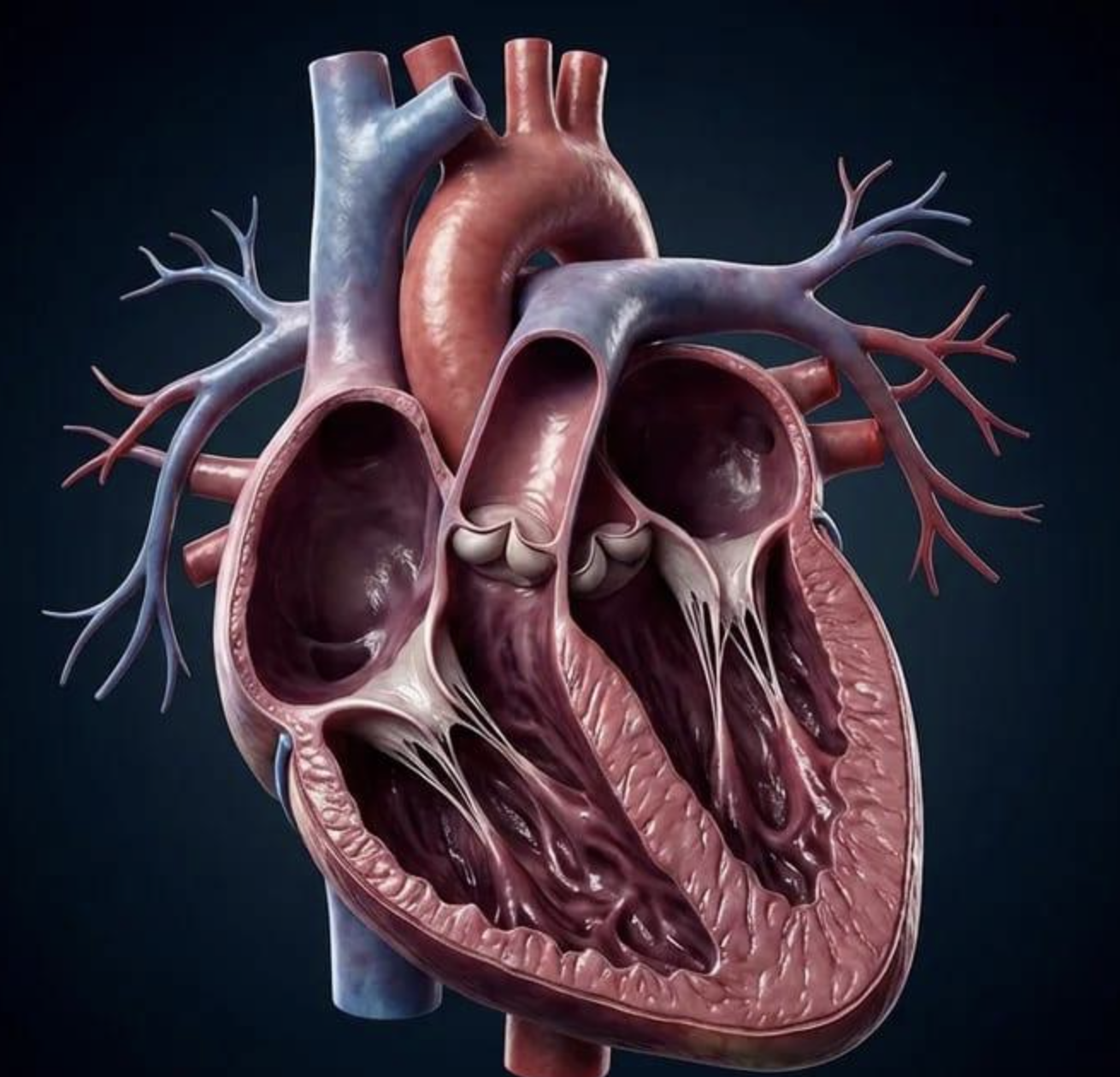
The four chambers of the heart
The role of the heart
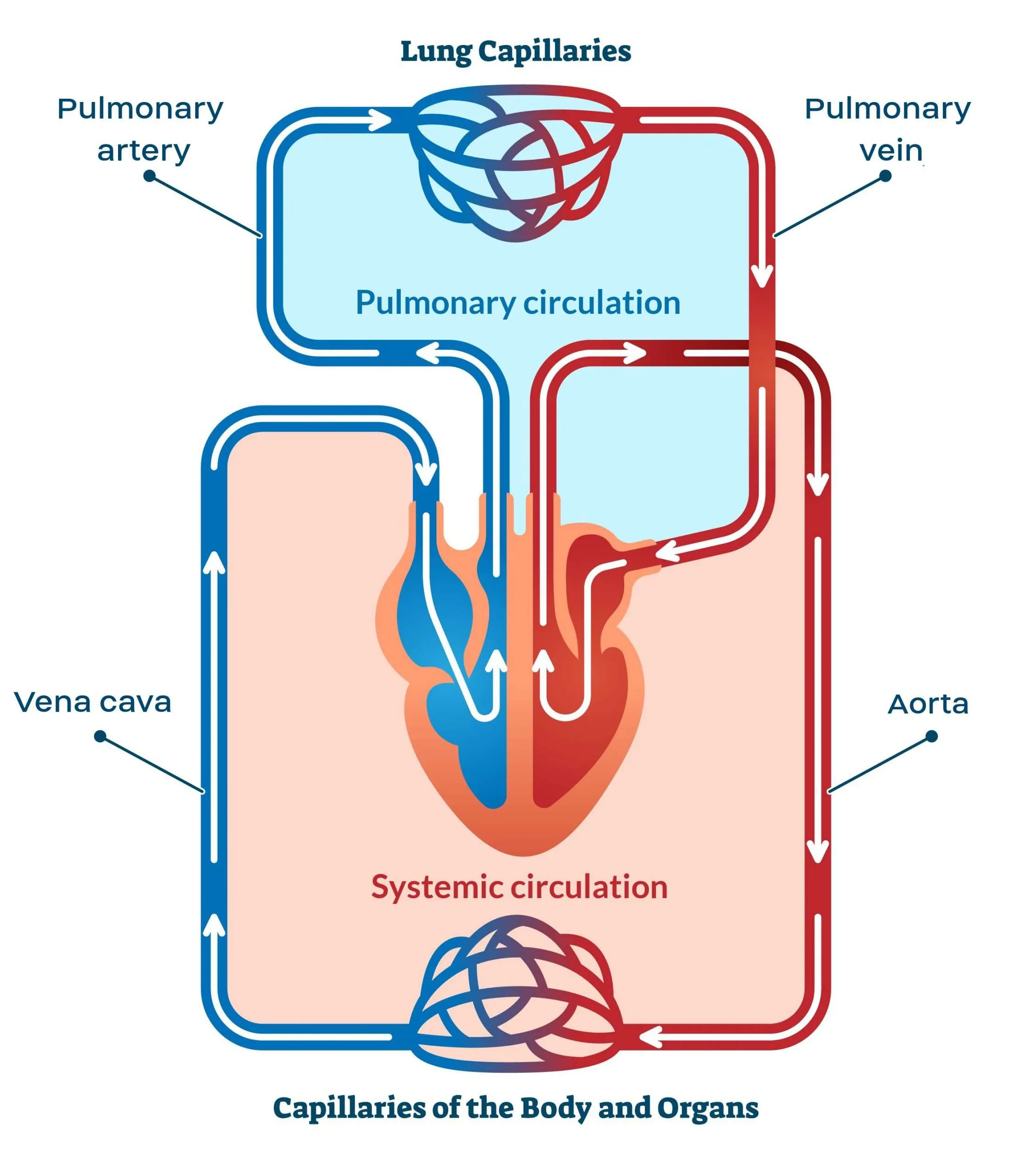
The heart is mainly responsible for propelling blood through the circulatory system but if we take a closer look, we quickly understand how complex and vital the role of the heart is. The cardiac muscle is divided into four chambers and must move blood through two interconnected circulations: the pulmonary circulation and the systemic circulation. The blood returning from the body is oxygen-poor, while the blood returning from the lungs is oxygen-rich.
The pulmonary circulation carries the blood between the heart and the lungs. It oxygenates the blood, while removing the carbon dioxide.
The systemic circulation takes the oxygen-rich blood from the heart and transports it through the body in order to deliver oxygen and nutrients to the organs and tissues. The blood then returns back to the heart oxygen-poor.
Why can’t all the blood pass through one chamber?
Oxygen-poor blood returning from the body enters the heart through the right atrium. It then travels into the right ventricle, which pumps it through the pulmonary artery towards the lungs. In the lungs the blood is oxygenated and then returns to the heart through the pulmonary veins into the left atrium. From there it moves into the left ventricle, where it is pumped through the aorta back into the body. This whole process becomes a vital mechanism, which allows the heart to make the blood circulation efficient.
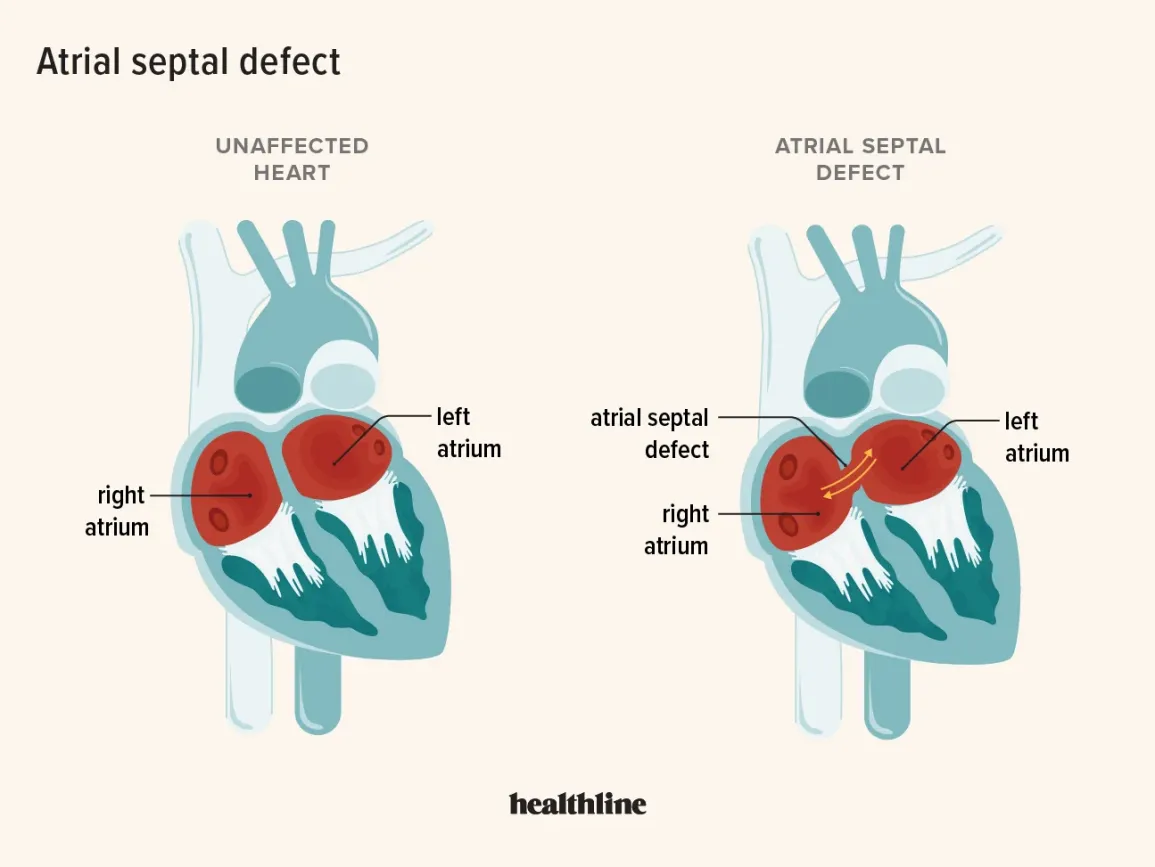
In order to understand why the heart has four chambers instead of one we will take a look at a heart defect called Atrial Septal Defect (ASD). In this case the wall between the right and the left atria has a hole, therefore the oxygen-rich blood mixes with the oxygen-poor blood. In this case the blood that should travel to the body may not be as oxygenated as needed, and the blood that travels to the lungs may be too oxygenated. This defect is considered to be simple and it may close on its own as the heart grows during childhood but it allows us to understand how important it is for the oxygen-rich and oxygen-poor blood to stay separated.
What does each one of the heart chambers actually do?
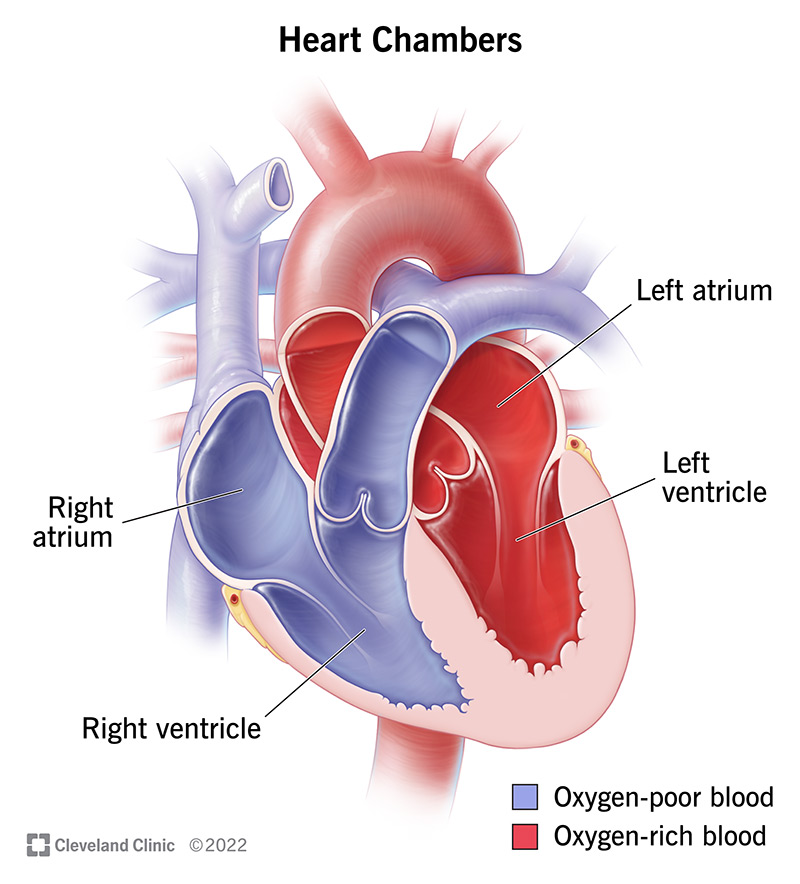
The right side of the heart is responsible for transporting the oxygen-poor blood to the lungs.
The right atrium receives the oxygen-poor blood coming from the body. Blood drains into it from two large veins and a smaller one: the superior vena cava, the inferior vena cava and the coronary sinus. Its job is to collect the oxygen-poor blood and contract to push it through the tricuspid valve into the right ventricle.
The right ventricle contracts in order to push the blood through the pulmonary valve into the pulmonary artery. The right ventricle moves the same volume of blood per beat as the left ventricle, but by far less resistance.
The left side of the heart is responsible for transporting oxygenated blood to the body.
The oxygenated blood flows through the pulmonary veins into the left atrium. It collects the blood and then it contracts in order to push it through the mitral valve into the left ventricle.
The left ventricle, also called the powerhouse of the heart, is responsible for generating enough force to pump the blood into the systemic circulation through the aortic valve. It has a far greater workload than the right ventricle, and therefore its muscular wall is roughly three times as thick as the right ventricle’s.
As mentioned above the cardiac muscle has four valves: the tricuspid valve, the pulmonary valve, the mitral valve and the aortic valve. But what is their purpose? They open when blood gets pushed with force through them and as the pressure reverses, they close. This mechanism prevents the blood from flowing backwards.
Conclusion
The four chambers of the heart are what transform the cardiac muscle from a simple pump into a complex and vital apparatus that is able to accomplish a multitude of tasks simultaneously. Each of the chambers has its own role and responsibility that keeps the blood pumping. Without this structure, the heart would have never been able to ensure the transportation of the oxygenated blood where it is needed or the reoxygenation and cleaning of the blood from carbon dioxide.
Sources
How Blood Flows Through the Heart & Body
Pulmonary circulation | Definition, Function, Diagram, & Facts | Britannica
Systemic circulation | Blood, Aorta, Blood Pressure, Human Body, & Facts | Britannica
How the Heart Works - How Blood Flows through the Heart | NHLBI, NIH
Congenital Heart Defects - Types | NHLBI, NIH
How the Heart Works - How Blood Flows through the Heart | NHLBI, NIH
The Four Chambers of the Heart and What They Do - Biology Insights
Content - Health Encyclopedia - URochester Medicine
https://my.clevelandclinic.org/-/scassets/images/org/health/articles/23074-heart-chambers
https://www.shalom-education.com/wp-content/uploads/2022/09/Shutterstock_1692929086-3-scaled.jpg
Stay Informed
Join our community of medical professionals and researchers. Get the latest insights delivered to your inbox.